Saturday, August 12, 2006

Seth Schultz, A telephone interview with J. Brook on 12/5/01

~~~~~~~~~~~~~~~~~~~~~~~~~~~~~~~~~~~~

January 23, 2002


~~~~~~~~~~~~~~~~~~~~~~~~~~~~~~~~~~~~
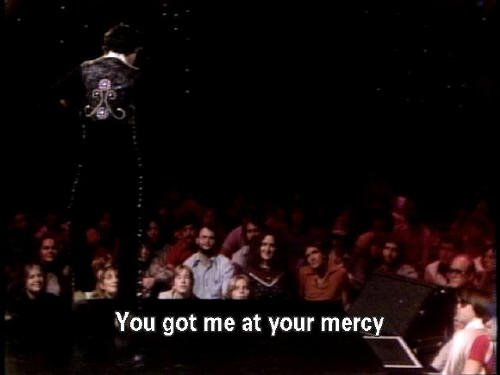
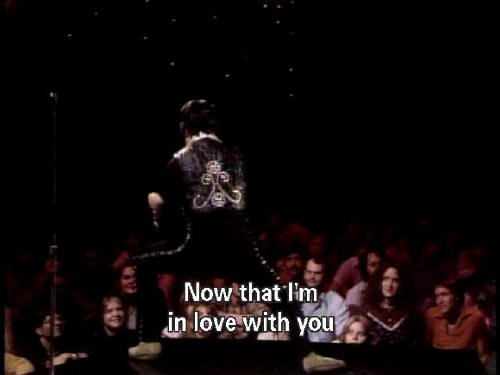
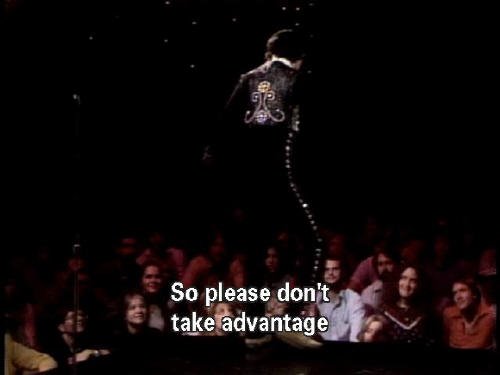
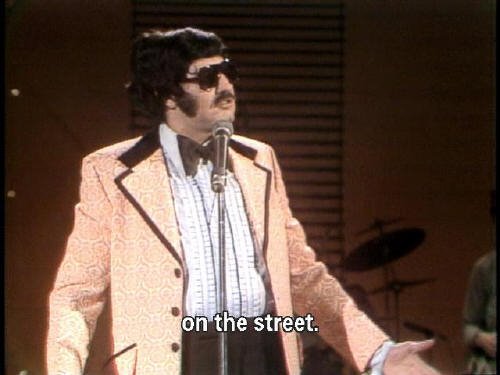
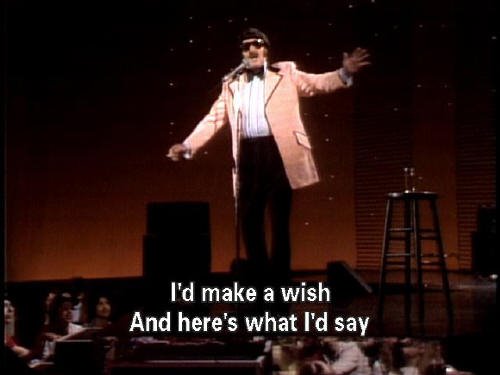
Seth Schultz is the director of The Real Andy Kaufman, a documentary capturing a performance by Andy Kaufman at a Catskills resort in late 1979. The performance itself is highly entertaining and includes Andy's hilarious version of the song "My Way" and ernest offerings from various members of Andy Kaufman's very own family! The film is also sprinkled with candid remembrances of other comedians that worked with Andy Kaufman. And if that weren't enough, the Real Andy Kaufman ends with a rare, unguarded interview with the real Andy Kaufman.
~~~~~~~~~~~~~~~~~~~~~~~~~~~~~~~~~~~~

What is your affiliation with Andy?

I first heard about Andy in '74 or '75. My dad ran a comedy club called Pips and, because of the club being there as sort of a historic landmark in Brooklyn and knowing I was the son of the owner, my high school buddies would tell me who was in the air in stand-up comedy, what was new and funny. And friends of mine at school told me they had seen a guy...I'm not sure what show Andy had done...maybe the Dean Martin summer replacements. Or whatever one of the first airings was. He had done Mighty Mouse, and a day or two later, my father had gotten wind of it and told me that this guy named Andy Kaufman booked next week. And I told my father that all the kids at school were buzzing about him saying it was magic. So, Andy finally walked into Pips, his first weekend booking. I hadn't seen him, and I know right away that this was almost a visitor from another planet, his walk and his posture, almost like a Venusian. This man is definitely from Venus walking around as an earthling. So, I immediately introduced myself...I was 16 1/2 and chubby...and Andy was a very accepting guy and sweet. So, I started helping him with the props from the car into Pips.

Just like Bob Zmuda got to do?

Yeah, well, you saw Andy, and you wanted to sort of be like the Man of La Mancha's Sancho? The one who would help him with his horse and his pack. In a way it was like serving a lord when you saw him. It was great.

Well, what I meant was that Andy met Bob Zmuda in character. The story was that Andy got him to help him load stage props into his car while playing Foreign Man, and then, as Andy drove away, he broke character saying "Sucker!!" or something like that. On first meeting, Andy was playing it up in character to Bob, and I wonder if he did the same thing to you?

Well, Andy was just a very gentle Long Island guy. But then I remember, once he was set up, he was fascinated that Pips had a hot fudge sundae machine at the ice cream counter. They served espresso and all these types of desserts, and he just loved sugar. And immediately, that first night he came off he said [innocent kid Andy voice], "Could I try a hot fudge sundae, please?" Like a little boy at a counter. I just couldn't believe there was like this six foot three adult, and he had more of the vibration of a four year old that I use to play with. Like a little prince. And then, when he finally did Mighty Mouse and the full act, my father exploded into tears. I never saw my father laugh so hard. And my father had come up with comedians. My father, George Schultz, was a comic in the 40s. He had done stand-up with Lenny Bruce, Rodney Dangerfield, Buddy Hackett, Alan King. He was a very tough audience for any comic, because he was a comedic consultant and a comic himself. And for him to scream at Andy's Mighty Mouse and everything else he did, penetrated me even more that this was a rare, special soul, and one of the rarest to ever come through the doors of Pips. Pips had already been open 13 years. It had booked the likes of Rodney and Joan Rivers, and so many talented performers. And so each weekend that Andy was there, I started just bonding more and more and wanting to go along. At Pips, he also let me be one of his stooges in the show. And it was great, because I had this chubby little 16 year old face. So, one day I had to bring water up to him, and he rehearsed me off stage [soft-spoken Andy voice]"Now, Seth, when you bring the water up, I'm going to dump it on your head." Like a great director, he'd set up the role play, and then I would come out on cue, bring him the water, and the crowd would just give a....trememdous hussshhh. I stayed in character. I almost had tears in my eyes, but it was just incredible. This girl, Liz Wolenski, a friend of Andy's and also in The Real Andy Kaufman, said that Andy had the power of dialing the emotional dial...he had his hands on it. He could [manipulate the audience to] go from laughter to anger at will. And so, those little setups that he would do, from bunny hopping out of the club with 25 people behind him to the amazing Elvis and the crying and then into the bongo routine was just mind blowing.

So, he knew exactly what he was doing the whole time? He was not a "nutty person"?

That's what I was saying, I thought he was from another planet. He was able to monitor everything going on...and then beyond that. And carry it all in his head...perfect cue times...to me, a perfect actor. Such full commitment that people would lean over and go "Is he serious? What's wrong with him? I can't believe it." Such drama that to take it all seriously shows a rather low IQ when people say "How could he wrestle women"? Well, you fools, this is a five year old, playful child kidding around. It was all setups. It was always setups. From the Fridays appearance when Larry David used to be on Fridays, when he caused that commotion, all set up. With [Andy] and Michael Richards. Everything . Including the other flipouts he did. The full commitment of wearing a neck brace for months. Car accident victims don't wear a neck brace for months!! But to leave the house everyday and wear the brace. To me, he was every comedic actor I ever loved...like a Jack Lemmon, a Peter Sellers. And the round-eyed innocence of those big blue eyes were absolutely hypnotizing. Anyone who had a heart was just hypnotized by him.

So, you couldn't hurt him....

There was no soul I had ever been in the presence of who was that much a joyful child. And he loved and adored people every moment.

I wonder what would have become of him over time.

A greater and greater actor and more complexities in films where he would have full creative control.

Do you think his behavior would have changed? Do you think he would have grown up in a way? Becoming less innocent?

There's always a chance of that, but Andy came from such a loving, loving family...if you ever met his brother Michael, his sister Carol, his mom or his father, every relative, the same...just blazing, loving, smiling, healthy, from such a straight loving family. It's amazing that such a magical comedic prince came out of it. But his hunger to just perform was so powerful. It truly was. As I said in The Real Andy Kaufman, you really had to be in the room with him to feel his magical vibration. Because, when you see tapes, films, their just electronic impulses or photographs...you don't carry the vibration. And that was his major power. I mean, when you were in the room with him, it was like a hypnotist. You could not help getting sucked into that innocent perfect posture, uncomfortableness that he would show, that wonderfully acted nervous performer. He loved playing the talentless guy, that's what he loved doing.

The doofus guy...

That's why at Kutsher's [Catskills resort where much of The Real Andy Kaufman was shot], he sang "Oklahoma" so out of key, and so out of beat. And jumping up and down, which is the biggest no-no for a singer. You don't jump up and down and ruin your breath control. He did everything he could to destroy the song, and yet, people adored that they were screaming at it. But he didn't screw around when it came to Elvis. With Elvis, it was like a recording, a movie of Elvis. Full commitment.

How was it decided that you would get to film this performance? How did it happen?

Well from meeting him back in '74 or '75, I'd been with him countless times. Plus, going to the Improv, going to Coney Island late at night to ride the rollercoaster, he knew I loved him, and he knew that at 20 years old, we had that understanding. He just knew that I was adoring every moment of what he did. Plus, he knew I was the son of a hipster and had seen it all, so he always got a kick out of my face, growing wide-eyed each time he did something. I had a little bit of savings, and I had taken a film production course at this new school. I just wanted to run some sort of a documentary on the guys who were around me at the time. There was a young Jerry Seinfeld, he had started at Pips basically for his first paid gigs, and Andy was there. It was a funny thing...I rolled the most film on Andy. ...

[Interrupted for another call....]

I wanted to make a documentary of my dad, a big club owner, but it was really more about Pips than my father in the beginning. I just rolled these four magazines of film on Andy that night, like 44 minutes. The most film I had for anyone else was like 5 or 8 minutes of footage. I just knew that no one else was shooting him, and when I called, he said why don't you come up, I'm going to be performing at the Catskills...and it just happened. And we were there shooting and then we went backstage...and that's where the real gem came, because Andy knew I was just a student. And when you're rolling on the guy [and Andy] knows your not shooting for any specific station, you're just rolling for the sake of rolling. He was so relaxed when I was doing a playful interview with him that I think it was really the only time on earth when someone really caught him off guard as Andy Kaufman from the Kaufman family...not Andy Kaufman, the comedian.

Well, you would know that because you saw him off camera...you were friends with him. So you would know better when he was goofing and when he was...

Oh, sure...from eating out at the diner after Pips was over or going out following him around with his New York clique from the Improv, and then doing something nutty like going to Coney Island, to an amusement park ride for an hour at 2 in the morning. But what he talked about in that [The Real Andy Kaufman] interview was really his gentleness. That's it exactly. Here's the gentle soul actually speaking. Again, because when a loving friend is shooting you, you're a different guy than when a cold producer from so and so has come in. I was rolling out of love and with my own money, and he knew I wasn't a rich. Basically, it was just a comedy club, family business, very small. Not like the Comedy Store. You know, Pips was always like a 110 seat room. And we were really only busy on the weekends. So, we basically made a living and never got really rich from it.

At that time were there thoughts of releasing this film?

I was going to try to put it on PBS or somewhere. It did end up on Showtime in 1981. Not Andy...just about 7 minutes of Andy within that first documentary on Pips. But then once with the explosion happening with Man on the Moon and other people, I figured, I have the 44 minutes, let's put it all together and really show people this is him. Why rent Jim Carry when you can see the actual dude in all of his beauty! Technically, a lot of the footage is not great, but it was in 16 mm, in focus....there was sound. It was enough to capture.

And you were a young person too...

Yeah, I was about 20. First time I had ever rolled 16 mm camera and sound.

And this was before we had camcorders...

Yeah, no camcorders then.

Can you imagine if we had camcorders then...

Oh, there would have been so much delightful footage of him playing.

And from what I read, he did so many things impromptu that we'll never see.

He always did with his friends. He would perform on the spot. Once you see the documenary, you'll hear some great stories from other people as well, like Liz Wolenski, who spent some good time with him. Liz is a comedian and a writer.

Lost in the Funhouse (Bill Zehme) , excerpt


To crack a nut is truly no feat, so no one would ever dare to collect an audience in order to entertain it with nut-cracking. But if all the same one does do that and succeeds in entertaining the public, then it cannot be a matter of simple nut-cracking.

Franz Kafka,
A Hunger Artist


Like never before, this was their time. Those possessed of youth and hubris who stood alone with microphones, telling clubdrunks about their mothers fathers wivesgirlfriendsboyfriends lovetroubles neuroses ethnicities fears, sharing their Observations about life dating commercials hygiene pets fashion fastfood toiletseats politics movies doctorslawyers agentsshrinks conveniencestores hotelrooms airlinemeals sexdrugsandrockandroll--it was their time to say notice me and it began a rush, then an onslaught, wherein more and more of them kept coming forth to display their singular/similar attitudes. And if it were not for this being their time, it could not have also been his time, even though he did not do what they did. He was theater whereas they told jokes--but he belonged with them; there was nowhere else to put him. It was the only context in which he made sense, not that he made sense, not that he ever tried. So the others, the joke people, they always stood in the back of the room, whatever room, to watch what he would do next. To them, he was spectacle and mascot, not a peer; scant few of them could ever manage what might resemble normal conversation with him. He would not/could not drink beer with them or talk sports or chicks or news of the day with them; after his sets, he busied himself with the club's supply of ice cream or chocolate cake, sometimes asking mommyish waitresses to spoon it into his mouth ("I had to feed him as if he were in a highchair," said Zane Busby, who willingly indulged him at Catch. "Like here-comes-the airplane-open-the-hangar-doorrrrr!) But they all watched him work--Robert Klein (revered elder statesman of young comics); Gabe Kaplan (bound for television sitcom); Jimmie Walker (also bound, who observed, "The foreign thing always amazed me because sometimes he actually communicated without speaking English.... People responded and you'd go, 'My God! How is this working?!'"); Freddie Prinze (also bound); Richard Lewis (chief intellectual neurotic, who observed, "Andy was almost like Ionesco doing stand-up"); Richard Belzer (emceed at Catch, often helped lug Andy's props into the club basement before shows, who observed, "I couldn't believe the courage. Either consciously or unconsciously, Andy was challenging and educating audiences, stretching their imaginations.... He made other performers more daring--he had that effect.... He was a performance artist before the term existed"); and Jay Leno (attitudinal iron man, who observed, "Most of us thought he was very funny, but we worried that no one else would get him. We even felt sort of sorry for him.... He just behaved strangely, in order to get a reaction of any kind, even hostile. There were nights at Catch a Rising Star when he would lie onstage in a sleeping bag"). No comic ever wanted to take the stage once he departed from it, for he never left an audience the way he had found it--the room would be transformed, rendered giddy or dizzy or dumbstruck or irate. "It didn't take very long to realize as a young comedian that Andy Kaufman closed the show," said Lewis. "You couldn't follow him unless you just ran around the room setting furniture on fire. I think he tried that, too. He was devastating in every sense, great but sometimes completely insane." Of course, they all believed him to be crazier than they were; he believed it was just the reverse--but only whenever he gave it, or them, thought, which was not usually, not to be aloof no really.

So The New York Times came to take his photograph onstage at the Improvisation in May 1974--about a month after he taped his Dean Martin appearances and about a month before the appearances aired. He was wearing a feathered Indian headdress (his unspoken homage to wrestler Chief Jay Strongbow; he often wore it to and from the club, even on subway trains) and a yellow T-shirt with silkscreened palm trees swaying across his chest which was the sublayer of all other layers and it was the layer he wore when performing at conga the various "folk songs" from his home island of Caspiar to celebrate seasonal harvest. (One such song, "Aba-Dabbi," was performed in native gibberish to the tune of "Alouette"--with perplexed audience sing-along always attendant.) And then the photograph was published in the esteemed newspaper of record on May 28--which could not have been more exciting--since his likeness was featured among pictures of legendary comics Mort Sahl and Shelley Berman and contemporaries David Brenner and Freddie Prinze. But the photos were assembled around a package of stories about the dark and craven lives of comedians, emblazoned with such headlines as IT'S NOT A LAUGHING MATTER, BEING A COMIC THESE DAYS and DESPITE GAINS HERE, IT'S TOUGH TO EARN A LIVING and PSYCHOLOGIST FINDS FUNNY MEN ARE SAD MEN. And the caption beneath his photograph mistakenly identifed him as "Howard Itzkowitz, a young unknown trying out at The Improvisation." And this was his debut in The New York Times. Moreover, he was mentioned in none of the articles therein--although he was rather pleased to have been excluded from the one about a dispiriting survey of fifty-five nationally known comics conducted by a psychologist who pinpointed a common thread of childhood trauma in all of the subjects. Meanwhile, the psychologist--one Dr. Samuel S. Janus--was described in the first paragraph as a former "song-and-dance man on the Catskills borscht circuit." (Oh!) Song-and-dance-man! Well, there was the solution! Never, ever had Andrew G. Kaufman considered himself to be a comedian. And from that moment forward he would traverse great lengths to correct anyone who ever accused him of such. "I never claim to be a funny man, a comedian, or even a talented man," he would say always thereafter. "I'm just going up there and having fun. And if people want to join me, and watch me, have fun with me, then that's...um, fine." And he would conclude always, "What I am is a song-and-dance man!" He thought it sounded jauntier. Anyway, The New York Times said that he wasn't Howard Itzkowitz in a correction printed two days later.

There had been this meditation girl whom he had met not long before leaving Boston and about whom he was crazy. Her name was Kathy Utman--she was a roommate of Prudence Farrow's--and her spritely air and small mellifluous voice enchanted him completely. He had never met such a blissful being--even among all of the other blissful ones. Diminutive, childlike, she seemed to sprinkle love petals wherever she stepped; he often compared her to a pixie named Piccoli from some story he knew--"He said I was like this little fairytale pixie person who came to earth and her job was to make people love each other more and to especially teach all the little boys how to love," she would recall, giggling. He also said that she reminded him of Little Eva from Uncle Tom's Cabin and sent her the book with all of the Little Eva parts marked up. He wrote her fanciful, delirious letters--signed them I could just eat you up or MBFUA!!! ("He said that was the sound of a kiss.") She was a cloud; she loved him back like a cloud might love, couldn't fully commit because she knew he couldn't either really--"I was a little bit careful," she said. But they would play together--when on park lawns he insisted they run in slow motion toward each other with open arms flapping--and she would come to New York early on to see his act at the Bitter End et al. and they maintained an understanding that she, as a cloud, would sweetly hover nearby throughout his life, which she in fact did, more or less, even when she married other guys and in between those marriages as well. "He always said we would live together when we were old. He also said that he heard bells whenever he stood near me."

For this reason, Elayne called her Kathy Bells, not in a bad way, although maybe in an arch-bemused way, as would be her way. But then Elayne was different, like no one else had been or would be--"I was twenty-one years old...street-smart, cynical, and a tough cookie." He met Elayne Boosler not long after Budd Friedman had welcomed him to the performing fraternity of the Improv, where she was a hostess when not slipping onstage to sing, for her dream was to sing herself to riches. The night they connected he had just led the audience--in a bunny hop/conga line--out of the club and onto Ninth Avenue and around the block and back into the club. "I had to seat the whole damn audience again." He was wearing a sweatshirt that said I LOVE GRANDMA which was a new alternate sublayer. She told him, "You're crazy." He replied, not as Foreign Man, "Thank you very much"--and took her to a restaurant in Chinatown for breakfast, where "with a cool move" she signaled a waiter to bring them water, which he later told her was the reason he fell in love with her. She, meanwhile, loved his beautiful big blue eyes and the way he looked so strikingly handsome from behind.

She was brass like he never knew. She was also game and they became characters together--"I happily discovered that whoever he became, I had just the girl for him." At Coney Island, she was the bitchy gum-snapping moll to his Tony Piccinini, "an overconfident, inept Romeo" who loudly promised to win giant stuffed animals for her, drawing large and larger crowds that watched him fail and fail until she stormed off while he called after her, "Sweetheart! Baby! Don't do me like this--I love ya!!" He took her to Times Square porn parlors, where she would pruriently stare over men's shoulders and ahem until the places were emptied. She would accompany Foreign Man to wrestling matches at Madison Square Garden, where he entertained their seating section whenever a behemoth took a questionable fall--"Look at cat! Dat guy is so good, he knock de other guy down weethout even haffing to touch him!" They perfected a volatility that was sometimes real and often not and few witnesses ever knew the difference. Silver Friedman watched one nasty imbroglio unfold late one night on the pavement outside of the Improv--"We heard some shouting and the next thing we knew she was hitting him with her purse. And he was shoving her. Then he grabbed her purse and whacked her with it. And they're haranguing like two cats and didn't care who saw it. It was hysterical. But it was a lover's spat and they were very involved in it. I think it was real. It lasted about six minutes."

On nights when he didn't have to return his father's car to Great Neck, he stayed in her Greenwich Village apartment; Sunday mornings in bed he would read her the funny papers while eating ice cream. She studied his act and understood every nuance--"To listen to your own silence is an amazing secret of comedy," she would observe (without ever having met Maharishi), "and most people are not brave enough to do that. But he could stand there the longest with nothing perceptible happening, and yet so much happened." Whenever she sang at the Improv, however, he left the room; as such, he convinced her to become a comedienne. She had, after all, attitude to spare and had assisted him most splendidly with a character that he had begun developing who wasn't him or Foreign Man but a guy very much like the foul lounge singer he maybe/memorably saw in Las Vegas--Tony Clifton was his name, although nobody in New York knew of him, so he decided to call his character Tony Clifton. (He privately admitted that Richard Belzer, the acidic emcee at Catch who bore no resemblance except in stage demeanor, also partly inspired the character.) Which meant that he abused everyone from the stage while warbling badly while dressed in a dark coat and clip-on bow tie (for now) and wore a little grease paint mustache while singling out some schlub down in front and berating him until this noisy hostess chickie got fed up and bounded onto the stage and climbed on his back and started whaling on him while he insulted her and told her to knock it off with the women's lib jazz and said she oughta go back into the kitchen and raise babies like all chickies were meant to do whereupon she slugged him and he fell and begged for mercy until she left the stage in triumph and he started in again about how she should go back to the kitchen/babies and she moved toward him again and he said he was just kidding and everyone was furious and he would flee as hissing filled room as per busted steam pipe. Anyway, she was funny--could actually make him laugh (nobody else did really)--and so he counseled and coached her (quite incongruously) on how to relate to audiences and break that fourth wall and "come down off the stage"; one night, in desperation, she offered gum to an audience and heard better laughter and she knew she was onto something. No one really understood their relationship, the yin and yang of it, the fire and ice cream of it, although Silver Friedman would note, "I think he released the child in her." And everyone saw his influence when she took to arriving onstage while humming "The Way We Were"--just as Barbra Streisand did at the very beginning of the hit record--except Elayne never sang a word and kept humming and hummed the entire song; it got big, if unusual, laughs.

And they were together, more or less, until he had to leave for California a couple of years later and often he taped their conversations before and afterward, because he had recently begun taping conversations with everyone--street people, cab drivers, old people--and he gave her one tape they made together on which he lectured to her about the semiotics of a performer's fortitude in the face of defeat and she would poignantly play a piece of that lecture (which was a piece of him) near the end of one of her HBO stand-up comedy specials many years hence when she was famous and there was his voice, insistent and helpful--"...You're on a railroad train, you go through a tunnel. The tunnel is dark but you're still going forward. Just remember that. But if you're not gonna get up onstage for one night, because you're discouraged or something, then the train's gonna stop. You're still in the tunnel, but the train's gonna stop. [So] you [have to] just keep going.... It's gonna take a lot of times going onstage before you can come out of the tunnel and things get bright again. But you keep going onstage--go forward! Every night, you go onstage."


Every night, he went onstage and most nights received no pay other than spotlight and, with luck, applause--for this was policy at the Improv and at Catch a Rising Star, although Rick Newman graciously permitted performers to order from the menu, which in Andy's case meant dessert, preferably chocolate. And because he went onstage every night on as many stages as would have him, he was pitifully broke most of the time and was forced to consider a life in the theater and began filling up his daybook that spring of 1974 with times and locales of open casting-call auditions for chorus members and male lead singers and male dancers (he was, after all, a song-and-dance man) for such Broadway and road-company and dinner-theater productions as Grease and Pippin and Kiss Me Kate and South Pacific and I Do, I Do--and he was, of course, uniformly dismissed as hopeless in each instance. He also failed at an Equity chorus call for The Music Man, even though he was every bit the blithe and sly con man that Professor Harold Hill was--had even been deeply inspired by Professor Hill as played by the actor Robert Preston; had even taught himself two years earlier all five parts of Act One, Scene One, the convoluted multivoiced "Cash for the Merchandise" number, in which the traveling salesmen in the train car natter on in oddball synchopation about their desperate racket. (He had practiced all five parts with congas and thought he might at least put the piece in his act one day.) Meanwhile, Foreign Man was now getting so much exposure in the clubs that he needed fresh inept material to provide further journeys into the pathos, so he came up with new, um, jokes--like the one about a little boy named Jesus--not the same Jesus that live in de church, you know--whose mother sends him to the market for a quart of milk and a pound of butter but Jesus he say but Mommy I don't know how to go to de market and she say don't worry just follow de people but it was Sunday so de people was going into de church so Jesus followed them into the church and he see de man on his stage go, "Oh Jesus! What do you want?" (So, vait-vait until de punch!) So de little boy he say, "A dozen eggs and a pound of butter--" (Oh, oh no I am sorry.) He say, "A quart of milk and a pound of butter!" You know, because he thought that de church was de market, and that de man was talking to him, you know, because de man say Jesus and de little boy his name was Jesus. Do you understand?) Tenk you veddy much. And then there was the one about the four men on de aeroplane and it was going to, um, sink, so the men needed to get out and so the first man, from Texas, jumps and, as he does, he says "Remember the Alamo!" And the next man, from France, jumps and says "Vive la France!" So eet was only a man from England and a man from New York. So de man from England push out de man from New York. And as he push him, he say . . . eehh, something dat was very funny, but I don't remember what eet was. But but eet was very funny. Tenk you veddy much!

On May 23 (2:00 A.M.), he had begun to diagram on five-by-eight index cards many strange and ambitious new ideas for the act, first inventorying the plethora of people who lived within him and his various plans for each--BRITISH MAN (reads book, is interrupted by dissatisfied audience, continues reading, is humiliated, closes book); TONY CLIFTON (raps, "funny" stories, sings Charlie Brown, women's lib argument, threatened by husband, punched down by lady); LAUGHING MAN (comes out, laughs, tries to speak, raps about kids these days, takes encores & begs off; FOREIGN MAN (tells jokes, stories, Mighty Mouse, Conga Drums, retires from show business > Crying--OR becomes Elvis); BLISS NINNY (talks nice--I love you all, etc., repeat after me: Hello trees, etc., Oohhh); DUMB MAN; PRESIDENT (?); SLEEPING MAN (?); BORED ANGRY MAN; NEBBISH MAN (funny pathetic voice); PARANOID COMEDIAN; SOUTHERN MAN (cowboy country singer); DRUNK (?); WRESTLERS; CRYING MAN; NERVOUS MAN (wears earplugs, can't stand noise); CRAB (cigar-smoking, thicklipped grouch); THE TELEVISION (have a TV character pop out of screen and become live--maybe the bad guy). This last would require greater technical advancement than had been developed by 1974, especially for nightclub stages--but a mad visionary appeared to be at work. And for the next three weeks, in the hours just before sunrise, he drew up plot-twist scenarios that placed these people onstage, one after the other, and sometimes all at once, and sometimes all of them coming through the television screen, and sometimes getting into wrestling matches with each other, or appearing on a mock Dating Game, and there would be Applause & Reaction signs that lit up (at inappropriate times so as to goad audiences) and an anticlimax wherein character unresolved yet forgotten (possibly disliked by audience) returns to be resolved, or else there could also even be an onstage Tornado changing everyone's lives in the middle (or maybe end).

Certain people inside him had been showing up in clubs by now--not with him or anywhere near him, because he wasn't there when they were, which came to be understood when they did not respond to conspiratorial winks or hey Andys. Tony Clifton was making himself known, as was British Man, whose clipped accent faltered as often as his starched readings of The Great Gatsby--British Man was, for reasons unknown, a proponent of Great American Literature. "He would start by reading all the copyright information and small print in the front of the book," said Rick Newman. "The crowd would seem amused at first, then as he kept reading and got two pages into the first chapter, some people would get up to leave. But he wanted that." A protracted negotiation with the audience ever ensued, during which a rattled British Man always tried to press on through the indignation--"Everyone would go booooo boooooo," he later explained. "And I'd say, 'Now, look! If you're not quiet, I will have to close the book and forget about the whole thing!' And there would be cheers. Um, you know, I would just do it for their reactions." (Years afterward, a false legend circulated that he had read the entire book to an audience in Fairfield, Iowa--home of Maharishi International University--because the Midwestern bliss people were simply too polite to leave. In fact, he rarely finished the first chapter anywhere, much less two pages. But he liked telling that story.) Sometimes, if he disliked an audience--"like when they would be so terrible and rude and I felt no satisfaction performing my regular act for them"--he would open the book and begin reading in his own voice. At Catch, he once sent Sleeping Man forth to try it--"He took the book, the microphone and a flashlight with him into his sleeping bag," said Newman, "then read it while zipped up inside. It looked like a talking sandbag onstage."

Meanwhile, he had begun cross-breeding Laughing Man with Bliss Ninny (adding a dash of Clifton) to create Nathan Richards, perhaps the happiest and most unctuous entertainer ever to tread boards. Dennis Raimondi, a TM follower who had become a close friend through Kathy Utman, observed Richards in early club development--"He was the kind of guy who bounced onto the stage and just gushed: 'Hey, ho ho ho how ya doin' it's great to be here you're such a beautiful audience you are beautiful people and I'd like to sing for you because you're just so special to me....' He would just be, you know, a little bit too blissful. And he'd wander through the audience and sing to them--'I have often walked down this street beforrre thank you thank you'--and kiss the women, most of whom just pushed him away. And he'd say, 'Come on, you love it and you know it, baby!' Then after the song he'd say, 'Gosh, I'd love to stay and sing for you all night, but I have another gig.' Then he'd run offstage to no actual applause, then come back and say, 'All right, I'll do another song just because--' He would do that like ten times. Some people were ready to throw dynamite at him. Then again, other people actually believed he was for real and enjoyed him. Once, we were out in front of Catch a Rising Star afterward and a lady came up to tell him, 'Nathan, you really have a beautiful voice!' And Andy looked at me after she left and said, 'Sometimes I think they'll never understand what I'm doing.'"


Excerpted from Lost in the Funhouse by Bill Zehme. Copyright © 1999 by Bill Zehme. Excerpted by permission of Bantam Dell, a division of Random House.

An interview with Bill Zehme


Andy Kaufman's performances sang with the generous bravado of Mighty Mouse, the uncanny snarl of the true Elvis, the boorish antagonism of Tony Clifton and the illiterative syncopation of Foreign Man. Clearly, editor and author have spent some time with these characters. Tank you veddy much and enjoy the show.

Jacob Hoye: Bill Zehme, author of LOST IN THE FUNHOUSE, (Pause--laughter) W-D-E-L-L, 1540 Broadway. Welcome to the show, Bill.

Bill Zehme: Hey you're Jay [Leno] now.

(laughter)

Were not gonna kid anybody here are we?

JH: No

You edited the book.

JH: That's true

Pulled it outta me.

JH: I was tempted to put on a crazy British accent, pretend to be a journalist and harass you.


That's good. No, I'm very vulnerable right now.

JH: I know.

Give me a couple weeks and we'll try that.

JH: What I've never asked you is what drew you to Andy Kaufman in the first place?

A guy I got to be friends with while I was living in Los Angeles, Richard Sakai, was a gopher on Taxi. This was 1993. I went out to dinner with him and he was telling me about his years there. He was the guy who had to go fetch Andy when he was meditating in his car a lot and just keep tabs on him because obviously he was a little less than diligent in the attentions he gave to being Latka Gravas. He told me the story of Tony Clifton wreaking havoc on the Taxi cast, which is covered in the book. This guy had invested such time and effort to pull this peculiar prank with his alter ego. Richard told me the lengths that Andy went to maintaining the secret identity of Clifton and just what had happened, all the way through the havoc and the firing of Clifton and being thrown off the lot. I'd never heard this story. This is one of those show business stories that not too many people really knew at the time, but it was the one thing Andy was always proudest of having done.

JH: It's definitely a priceless showbiz moment.

Because it was for an audience of...who? There was no public involved. It was a very private piece of life-theater. Right then, I got all juiced. I thought this is an amazing guy. I had seen him perform live in Chicago and had always watched his career with great interest, but I then thought, man, there's a whole other layer to this guy that nobody knows about. I became sort of obsessed with the idea of tracking it down and putting the pieces of the puzzle together.

JH: I remember that when this book surfaced for the first time, I saw the Lynn Margulies video I'm From Hollywood. I didn't know what to make of it. I thought it was astonishingly bizarre but I didn't know if it was real or fake and not fake so much as just theater.

Exactly.

JH: The mystery of Andy's work is the beauty of his art. I wonder if you ever had any apprehension about revealing "the truth."

I always feared the truth with regard to him because (a) it would be so hard to figure out and (b) that's the way he wanted it when he was alive. However, I thought the put-ons were becoming useless in retrospect unless you understood what he did to achieve them, what went into the making of a grandiose Andy Kaufman put-on, that what played as mayhem to the naked eye was in fact orchestrated and choreographed. If you don't know that you can't fully appreciate the genius of the guy, the genius of what he was trying to do, which was to perpetrate insurrection wherever he went and do it in the most innocent and childish way. He played for an audience of one. He made himself happy. Getting away with all that stuff was a tremendous conquest for him. On the other hand I thought he started not mattering enough anymore and when I took the temperature of his marketability six years ago, nobody really gave a damn. It's amazing that it's all shifted. I think being dead long enough helped. I think secretly people were waiting for him to come back and I think at some point people gave up.

JH: Was Andy insane?

I don't think he was crazy. I think he behaved in a crazy manner. Everything was so well thought out including what he was trying to achieve. He was the little boy who played games until he died. He never stopped being a little boy--there were probably reasons for that--that he wanted to remain innocent. He was always obsessed with innocence, and maintaining his innocence while feeding his darker urges. That became a real mano a mano inside of him. Dark Andy versus light Andy and the real guy was a light guy who happened to be possessed of a fairly brutal temper and a quicksilver ability to swing moods. He was the product of a father who had a temper. He knew temper. I think he didn't like it and kept it inside and I think he wanted everything always to be happy and innocent instead.

JH: He certainly didn't have an extraordinarily dysfunctional childhood.

No.

JH: He had a fairly standard fifties upbringing.

Completely standard and he only began to act out in rebellion when he was in his teens. Even so, sort of a controlled rebellion. He never went all the way. Most of his acts of wild abandon happened in his den when he was alone. I guess there's always an urge to consider him to be psychotic. But I don't believe that that's true.

JH: There's no evidence that anything he did was malicious.

No, not really. Unless it was yelling at his assistants or something like that and that was of a moment that had more to do with other things but certainly not in his career. He was above all that. He hated show business and show business kind of came to hate him for hating it. You can only tease an institution so long. He didn't do it in a boldfaced way. He always did it in a clever backdoor manner and mocked all of the traditions of show business one way or another. But it was not about maliciousness. He also knew where his bread had to be buttered.

JH: Andy always wanted to be famous.

Fame became of penultimate import to him when he was just a little boy.

JH: Success was its own failure.

It's amazing. He had all these dreams and he achieved them all by the time he played Carnegie Hall in April '79--that was the apex. Ever afterwards he would run out of dreams. He had to come up with new ones fast and they were wild dreams and dark dreams.

JH: More spontaneous.

Spontaneous combustion type dreams.

JH: His previous things were so well considered because he'd been stewing on them his entire life.

The whole precept of his act was deceit; that foreign man was this inept guy who suddenly wasn't foreign anymore; he was Elvis, and then he came back to being the foreign man and for a while people wanted to believe that's who he was but he didn't want people to think that was all he was and, in essence, he ran through most every piece of business by 1977, his second full year in Hollywood. Really, he expended his entire bag of tricks on the show. On Saturday Night Live he was dispensing them over the course of months, but he did van Dyke 13 weeks in a row and pretty much blew 13 of his top bits and that was frustrating for him and it became frustrating for critics. They wanted him to keep coming up with fresh material. That became the on-going complaint. But he had run out of people to fool and didn't know any new ways to do it other than to become bellicose either as the wrestler or as Tony Clifton. That was his only way to act out.

JH: How do you think Andy's wrestling theatrics would have played today?

His wrestling was basically high school on the mat wrestling with no real theatrics other than the bellowing of the bad guy that was him. He really lacked the theater. It would have been great today. Pyrotechnics would have been attendant. It would have been amazing for him to do it now. He was visionary in that regard. Who knew that wrestling would become what it is.

JH: Wrestling seemed to be the place in which he was taking the most satisfaction, maybe the most satisfaction of anything he did.

He was happier wrestling than doing anything else. You know, the Jerry Lawler secret is one that even the family was protective of. His father was nervous about me revealing it was a hoax. He didn't know it was a hoax himself, until later. He wanted to sue Lawler for unsportsman-like behavior. The slap on the Letterman show Andy had to keep to himself. He didn't even want his family to know about that. Which leads us to the other hoax that he had always wanted to pull off which was faking his own death. The one reason he couldn't do it was because he couldn't do that to his family and put them in the position of having to lie about it. But the thrill of wrestling imbued him with new life. Unfortunately, it was unappreciated by the public entirely. No one knew where Andy had gone. He disappeared for the better half of 1983 and he was mostly on the wrestling hustlings, out there screaming at Lawler, offering $5,000 to anybody who could beat Lawler.

JH: We know what Elvis thought of Andy ["Man, this guy's got a weird mind!"], but I have to ask you what Bob Dylan might have thought of Andy.

Dylan loved Andy. Greg Sutton, Andy's childhood friend and bandleader, was on the road in Europe with Dylan when he heard Andy had died. He was playing bass for Dylan. He tells a really touching story about how he was crushed when he heard the news. He knew it was coming but it still devastated him, as it would, but Dylan was so respectful, apparently, of Sutton's mourning that he would sit with him. They'd ride together to and from gigs and he would talk about Andy with him and how much he dug Andy. Andy's rebellion was not lost on any genius.


interview by Jacob Hoye


Letterman Morning Show: Fall, 1980 (Transcript by BILL ZEHME)


DL: He stars on the series "Taxi" as Latka. However, he has not been on television much lately. He's been, I guess, busy doing other things. Nonetheless, I'm glad that he has agreed to be with us here this morning. Please welcome Mr. Andy Kaufman.


(Applause and cheers. Andy, looking very bedraggled, enters wearing pink sportcoat, yellow pants, blue plaid shirt, orange t-shirt. He is totally unkempt-clothes wrinkled, face unshaven, hair uncombed. He sits next to Dave looking utterly clueless and as though he might keel over at any second. His eyelids are heavy, he has a hacking cough, and there is a mucus-like substance on his upper lip.)

Andy. I really appreciate you being here this morning. It's nice to see you. Tell me about "Taxi." (close-up of Andy w/runny nose) Would you like a tissue? Can I--would you like a tissue? So tell me about-see, people sometimes eat breakfast while they're watching the show. Now, there was a TV strike, you know, and some shows were not in production, but now they're going back into production, and are you gonna--I guess, are you gonna be on "Taxi"? You mentioned before the show, there are some problems?

AK: Yeah, I quit the show.

DL: You quit the show?

AK: Yeah.

DL: You're no longer gonna be on "Taxi"?

AK: Right.

DL: You have your own show?

AK: No ... I'm not doing much special right now. This is--you know, I'm once in a while making appearances, like on this show here.

DL: Yeah, I know you're probably going to do movies.

AK: Hopefully.

DL: And I guess you'll be--you used to be on "Saturday Night Live" an awful lot, so--

AK: I don't know. I really don't have any control of that. If they asked me, I would do it, but I don't--there's nothing planned right now in the near future.

DL: You doing a lot of nightclubs, though?

AK: Occasionally appearing at The Improvisation in New York. That's the place I started out at.

DL: Yeah, yeah.

AK: Not really much. I'm living in New York now.

DL: Mmm-hmm. But things are okay.

AK: Yeah.

DL: I see now a woman mentioned you--

AK: (hacking cough)

DL: Can I get you a mint? Yeah, I know you wanted to--you're going to do a little piece for us this morning. Do you want to go to that now? What do you want to do?

AK: If you'd like. I can--

DL: We have a stool there, you want to do it?

AK: Thank you.

DL: Thank you. Andy Kaufman, ladies and gentlemen.

AK: I'd like to--before I begin, I would like to just say thank you very much to David Letterman and the producers of this show, and the people that run this show for having me as a guest. And it's a very--pleasure to come on this show and be here. I'd like to talk about my marriage. I met my wife several years ago, when I was struggling in New York, performing every night at The Improvisation nightclub. I would perform every night for free, and once in a while, I would get jobs elsewhere for maybe 50 dollars a night, and stuff.

And I met her while I was driving up from southern New Jersey one time. She was a cocktail waitress. And we went out a few times, fell in love, and got married. And she kind of, she worked as a waitress while I was working for free in nightclubs. And we lived together right outside of New York City, and we had two children. And--names were Mark and Lisa. And ... "Saturday Night Live" (coughs)--(audience laughter) discovered me. I'm--I'd rather ... if you don't laugh, because I'm not trying to be funny right now.

And shortly after that I went to California, and things really started happening. I started--I had a manager. I got a manager--Shapiro, West, and Associates. George Shapiro is a wonderful man. And he was my manager for the next few years. And then "Taxi" came along. And I was doing all these far-out things on television shows, but when "Taxi" came along, it was just one character, Latka, and I kind of felt inhibited by it, but, you know, I was just able to do the one character. I wanted to have more freedom creatively to do these other things, and--the things I used to do on "Saturday Night Live" and stuff....


So anyway, I quit the show, and my wife--At that time, I was wrestling women on "Saturday Night Live," and I got a lot of hate mail, and no producer would hire me after that. So one day I was at my manager's office, trying to get an engagement for a dinner theater in Wisconsin, and I got a call from my wife's lawyer. She wanted a divorce. She got a divorce. She got the kids, the house, she got all my money. Well, not all my money, but some anyway. She got everything. I moved to New York. And now--that's what I'm doing now--living in New York, and--I don't really have anything. (Coughs)

So anyway, if anybody could--I know this sounds like a cliché, but if you could send your extra money, I would appreciate it. Thank you very much.

(Andy rises from stool and with outstretched palm, walks out into the audience and begins panhandling. A security guard grabs him by arm, they argue quietly, and Andy is ushered out of the theater)

DL: Always a pleasure to have the young talent on the show. We'll be right back.

Letterman Show: Andy Kaufman & Jerry Lawler, 7-28-82


David Letterman: On April 5th, 1982, in Memphis, Tennessee, Andy Kaufman, the actor-comedian, and Intergender Wrestling champion, had his first wrestling match with a member of his own sex. The opponent was a very serious wrestling favorite named Jerry Lawler. Here, now, are the results of that match.


(videotape plays ... announcer calling the action)

"Lawler ... with a pile driver.... Only the second move by Lawler, and BANG goes Kaufman. It's gonna be a disqualification."

(Bell rings)

"Danny Davis, his manager, not believing it.... Jerry Lawler--6 minutes and 50 seconds, with a pile driver, has been disqualified. The winner, by disqualification--Andy Kaufman."

(Bell rings several times....)

"Lawler rolling Kaufman. He's gonna give it to him again. He figures he's already lost it...."

(videotape ends ... applause from audience)

DL: Tonight, for the first time on network television, they meet face to face. Here are Andy Kaufman and Jerry Lawler.

(Applause, cheers, boos....Andy and Jerry enter. Andy, still in neck brace, follows cautiously about ten feet behind Lawler)

DL: Andy--go ahead and have a seat, if you will....(Andy scoots his chair away from Lawler's). First of all, gentlemen, thank you. Thank you very much for being here. Andy, let's take care of your neck injury. Now, when was the match? April 5th, right?

Andy Kaufman: Mmm-hmm.

DL: And it's now almost August. Do you still need that neck brace on there?

AK: Yes ... I do.

DL: Are you in a lot of pain?

AK: Well, I'm not in nearly as much pain as I was--it's healing. But it's still enough to wear the brace.

DL: Uh-huh, uh-huh. One of those kinda nagging, lingering injuries that--

AK: I don't know what you'd call it, but I just have to wear the brace.

DL: Now--(laughs)--when I see Jerry here--I've never seen the man in person before--to me, you'd have to be nuts to want to get into the ring with this guy. He appears to be maybe twice your weight ... and he's better-looking. (Laughter) I'm just, I'm just.... I'm just teasing there, you know. But why--what was your motivation for wanting to fight him?

AK: Well, I'd had so many matches with women, and I started really believing that I was a good wrestler. I don't know--I'd beaten women bigger than him. I really thought that I could beat him. And, also, when I started getting worried, and thinking maybe I couldn't beat him, I thought I would just run away from him the whole time.

DL: Now, Jerry--was there ever any doubt in your mind that you would have any difficulty wrestling Andy?

Jerry Lawler: Ha. Not really--no doubt at all. You see, I don't want to sit out here and pretend that I'm friends with this guy, because I think he's a wimp. You see, I think when Andy was born, his father wanted a boy and his mother wanted a girl--and they were both satisfied.

DL: Now, just a point of order here. Now, I don't know a great deal about wrestling--but it looks to me like you gave Andy that second pile driver after the bell. Now, that didn't seem like a really sportsmanlike thing to do.

JL: Well, see--I noticed a small smattering of boos from the audience and everything, and I think that the people have gotten the wrong impression from all of this. You say that wasn't a sportsmanlike thing to do. But everybody that sees Andy Kaufman, the way he is now--you know, Mr. Nice Guy ... very loveable little Latka character and everything--this is not the Andy Kaufman that I saw. Because he sent a lot of interviews and clips into Memphis, insulting me ...

DL: As I recall, Andy, you kind of just egged him into this, didn't you?

AK: I was just teasing in fun.

DL: Just teasing in fun.

JL: I brought some of the small clips of things that he said about me, about some of the women that he wrestled.

DL: Okay, all right. So let's take a look at some of Andy's harassing work that Jerry Lawler had to endure, via the United States mails--some videotapes. You made these yourself, right, Andy?

AK: Yes.

DL: Okay.

(video rolls....)

AK: Lawler--you think you're really being smart. And, so-- Look, I'm from Hollywood--that's where we make movies and TV shows. I tape "Taxi" in Hollywood, I make movies in Hollywood--okay? I'm not from down here in Memphis, Tennessee, okay? I'm from Hollywood, and I want to have the respect that I deserve. When I come here, I want people to respect me, because I am a star--I am a Hollywood star. You got that?...

You know what, Mr. Lawler? I've heard all these things you've been saying about me on television. You want to rassle me? You want to--

(tape ends ... applause....)

DL: Well ... we'll pause here and regroup. We're gonna take time out for a commercial.

AK: I cannot see how you could be mad when you see something like that. I was just kidding.

DL: Well, we'll continue this discussion right after you folks at home take a look at this.

(break)

DL: Jerry Lawler and Andy Kaufman are here. Now, we saw the tapes that allegedly provoked Mr. Lawler into the match. Andy, why did you do that? That didn't seem like a very nice thing to do there.

AK: Um, I don't see how, uh, you could get, a person could get so mad from that. I was playing bad guy--that's what I was doing. I was playing bad-guy wrestler--it was a role I was playing. I wasn't serious about it. I don't take things like that seriously. Like: I am a star, I'm from--You know, that was just a role I was playing, you know?

DL: Uh-huh, yeah. So, in your estimation, Jerry--

AK: And I think that he just was taking it too seriously. He wasn't seeing the humor.

DL: You think he owes you an apology, then.

AK: Look. I always said you didn't have a sense of humor, and here the people are all laughing at it. So it proves my point.

DL: Yeah.

AK: And that's why I came here--it was because I asked for an apology. I apologized for all the wrestling I've ever done, all the abuse I've ever given the people that didn't understand what I was doing. And I simply think that an apology is in order.

DL: So it's come to this, has it, Andy? You want Jerry to apologize.

AK: Uh-huh.

DL: Now, is this the way--? Would that be an equitable thing, as far as you're concerned?

JL: I don't think so.

DL: Yeah.

JL: I don't think I owe him an apology. You know, he says it was all a big joke. I'm sure it was to him. I think he came down there with the intention of--

DL: Did you want to hurt him?

JL: Well ... yeah. I thought I had to hurt him.

AK: In all the matches I ever had against 400 women--I'll tell you, I was bigger than most of them, a lot bigger. And I never--not one time did anyone ever get hurt. I never had to prove anything. I never had to hurt. I was always very gentle with everybody I wrestled.

JL: You know, it's something that I take very seriously--it's the way I make my living--and he comes in making a joke of it. You know, he did it all for publicity. That's why he's still wearing--I don't know if it's a neck brace or a flea collar. I'm sure he hurt it, but you don't need it this long.

AK: I was in the hospital--

JL: He's milking it for every bit of publicity he can get. That's all he's doing.

AK: I had to spend three days in the hospital, in traction, and I was given this neck brace in the hospital. It's a very real neck brace, it's the real thing, and--

JL: It's been five months ago.

DL: Yeah. It seems a little--

JL: People have been in car wrecks that, you know--

AK: I just don't think that there was any--it wasn't really called for to do. You could have, I could have been killed, and I could have had my neck broken.

DL: But, on the other hand, I mean, nobody actually forced you into the ring, you know?

JL: That's right. I don't come out here and try to do stand-up comedy, or anything like that. You know, I'm a wrestler, you're a comedian--

AK: If you were the man that you think that you are, then you'd apologize. If you're the man that you say you are. 'Cause you're always talking about being a sportsman, and how you're such a great athlete.

JL: I never say anything about being a sportsman.

DL: Let me, let me--

AK: Well, I thought you're a professional athlete. You're always talking about sportsmanship. And sportsmanship isn't just--To go in the ring--

JL: That's right. I'm a professional athlete. You're a comedian. You should.....stay out of it.

AK: Yeah, well, I was going in the ring--and this is something that I was doing. And there was no reason to hurt me.

JL: As a joke. Right. It's not a joke to me.

AK: Well, as a joke, yeah.

JL: That's not a joke.

AK: Well, and it wasn't a joke to me--

JL: Did you laugh after, when you were laying in the hospital? Was it a joke then?

AK: No, it wasn't. But there wasn't any reason to purposely hurt me. You could've proven the point by just beating me. You want to prove what a big man you are.

DL: Let me just clear up one point here. There are a lot of people watching who probably view wrestling as being a show--a display, a demonstration. And this maybe as the pinnacle representation of that. Was the thing fixed or rigged? Are you guys really friends?

JL: No, not at all.

DL: Was it a scam?

JL: I couldn't warm up to this guy if we were cremated together. He is a wimp. That's exactly what he thought--that's what he thought about wrestling. He thinks it's all a big joke--a big fix or whatever. And then you're right--there are a lot of people that think that.

AK: As far as I'm concerned, you're nothing but a redneck. And you're just trying to prove a point, 'cause I was a Yankee. And I heard this from so many people in Memphis. I was going down there, and because you believed all that stuff that I was saying--

JL: There are a lot of people that think that way, and he was one of 'em. And I did to Andy exactly what I would like to everybody that thinks that way.

AK: You're lucky I didn't sue you!

JL: It was a chance to show him exactly what it's really like. And you found out what it's really like.

AK: 'Cause let me tell you something. My father said, my manager said--they all said that I had a right. I could have gotten a lawyer, and I could have sued you for what you did. And I didn't. And I just--all I want is an apology. Even you asked me, the last time I was on your show, if I was gonna have a lawsuit.

DL: That's right, yeah.

AK: And I could have sued you. I could have sued you for everything you're worth. And I didn't, because I'm not that kind of a guy.

DL: Yeah. You know what--

JL: What kind of a guy are you?

DL: And I'll just be over here... We're going to pause here for station identification, and get the hose...

(Andy and Lawler quarrel in background. Lawler stands up, faces Andy and lets loose with a sweeping right-handed slap to Andy's head. Andy and his chair topple to the ground)

(Band plays out to commercial...)

DL: Hi, there and welcome back to the show, ladies and gentlemen. As you can tell, Andy Kaufman is here, sort of...Andy, are you coming in here again or...

AK: (re-enters on Dave's left) I am sick of this bull shit! You are full of bullshit, my friend! I will sue you for everything you have! I will sue your ass! You're a motherfuckin' asshole!!!!!!!!! As far as I'm concerned!!!!! You hear me?!!!!! A fuckin' asshole!!!!!!!!! Fuck you!!!!!! I will get you for this!!! (exits stage and comes back to audience whoops and applause) I am sorry, I am sorry to use those words on television. I apologize to all my fans. I'm sorry, I'm sorry (on knees). But you, you're a fuckin' asshole!!!!!!!!!!!!! You're a fuckin' asshole!! (banging on desk) You hear me!! A fuckin' asshole!! (throws coffee at Jerry and exits stage).

DL: I think, uh, I think you can use some of those words on TV. I'm not...But what you can't do it throw coffee. I've said it over and over again...Well, that about wraps this segment up. I want to thank my guests, Mr. Lawler. Jerry, thank you very much for being here, and good luck to you, sir. And my thanks to Andy Kaufman...


(TRANSCRIPTS BY BILL ZEHME, CREDITES BY BILL ZEHME)

Thursday, August 10, 2006

Andy Kaufman, MR. X


Mr. X was a failure so far,
but hadn't had a chance yet,
for he had only started.
Mr. X is a playwriter;
Mr. X is a poet.
Mr. X is both.
He wrote a poem,
and put it in his play.
It got to be promoted.
And it got to be produced.
It was opening night.
Mr. X was very happy.
With all his friends to come & see,
the stage with actors,
the theater sold out.
It was the largest success
of plays that played.
At end, they called him up.
He then took a bow.
The applause was deafening,
and Mr. X went off.
He put his hand in his pocket,
and took out his gun.
He had the broadest smile of anyone,
as he shot into his head.
He was Dead!

Andy Kaufman

Monday, August 07, 2006

Doing the Elvis, pictures


Posted by Picasa

To be in Carolina in the morning...


Posted by Picasa